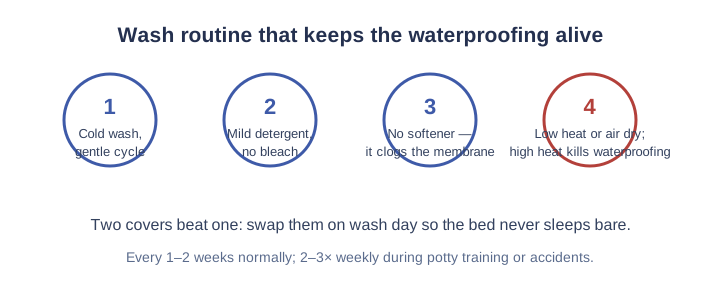
Verdict: machine wash cold, mild detergent, no softener, low-heat or air dry — four rules, and the fourth is the one that actually kills waterproofing when broken. A quality waterproof protector is engineered for hundreds of wash cycles; the membrane does not fear water, it fears heat and waxy buildup. Wash it with the sheets weekly and it outlives the mattress trend cycle.
The routine, step by step
1 · Strip and shake
Pull the cover off corner by corner and shake it out over the tub or outside. Hair, crumbs and dander come off here and never reach the drum.
2 · Cold wash, gentle cycle, mild detergent
Regular liquid detergent, modest dose. Skip bleach entirely — it degrades the membrane — and skip harsh stain sticks on the membrane side. For urine accidents, a half cup of white vinegar in the rinse cycle neutralizes odor without damaging anything.
3 · No fabric softener — this is the silent killer
Softener coats fibers in wax. On a normal towel that is the point; on a waterproof cover it clogs the breathable film and quietly ends its career. If the cover ever feels stiff, wash it again with an extra rinse, not with softener.
4 · Low heat or air dry
Tumble dry low and pull it out promptly, or hang it up. The membrane lives behind a fabric sandwich, so brief low heat is fine — but sustained high heat bakes the film brittle over months. Air drying is free and gentle; these covers dry in a few hours because they are thin.
Stains: treat the fabric side, not the membrane
For blood or stubborn stains, cold water soak first (hot water sets protein stains), then a dot of liquid detergent worked into the fabric with a soft brush, then a normal cold cycle. Never iron a protector and never dry-clean it — solvents and heat are both membrane-hostile.
How often to wash
| Situation | Wash cadence |
|---|---|
| Normal adult bed | Every 1–2 weeks, with the sheets |
| Night sweats | Weekly, with the sheets |
| Potty training / incontinence | Every 2–3 days — this is the two-pack use case |
| Pets on the bed | Every 1–2 weeks; shake out fur more often |
| After any accident | Same day if you can |
The upgrade that ends laundry-timing pressure
Most protector owners eventually buy a second cover, because the one on the bed is never the one that is clean. The two-pack exists for exactly this: swap on wash day, run the cycle whenever.
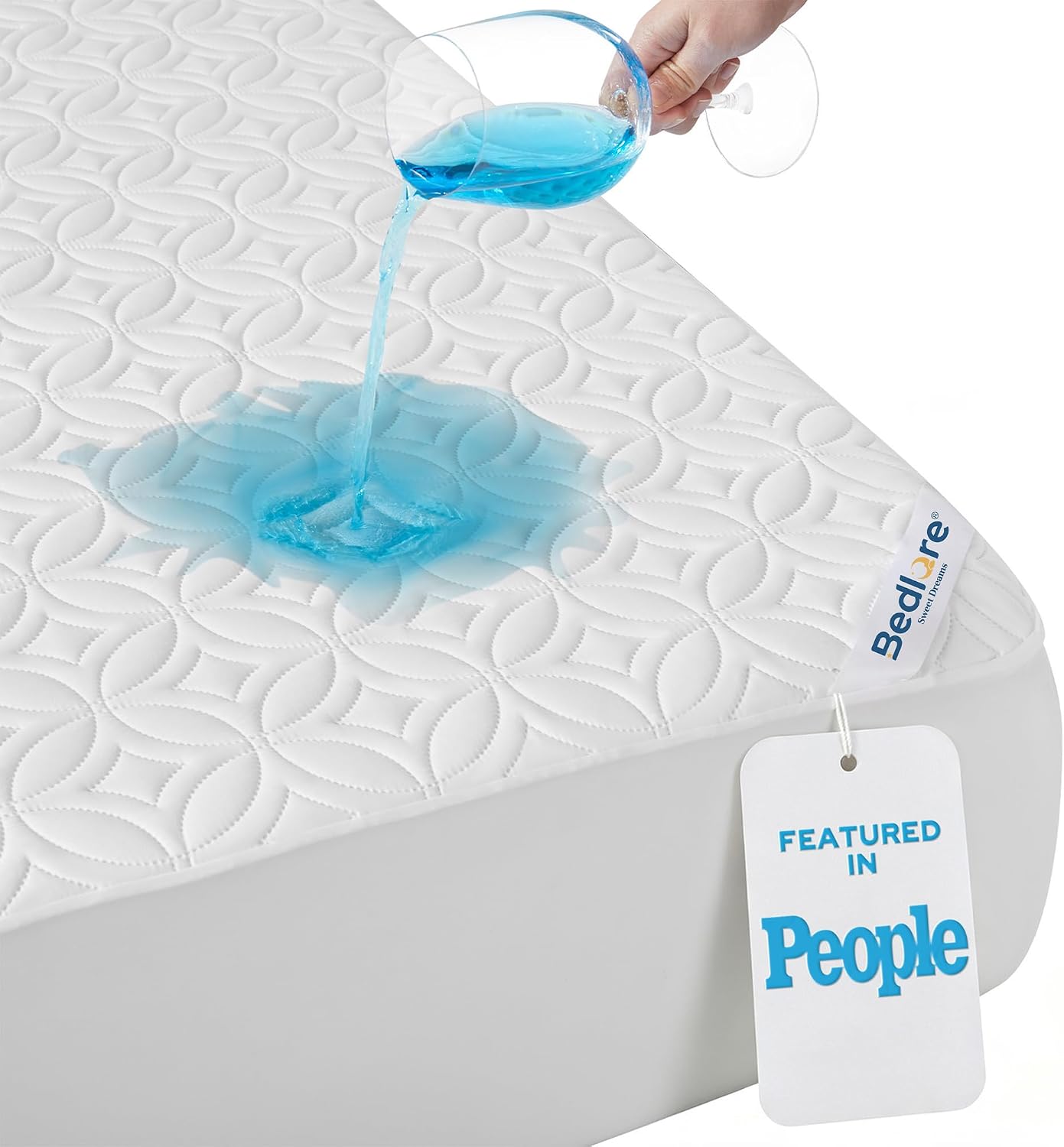
#1 pick
BEDLORE Waterproof Mattress Protector — Queen
- Waterproof TPU backing
- Deep pocket skirt, fits 6"–18"
- Noiseless soft cover
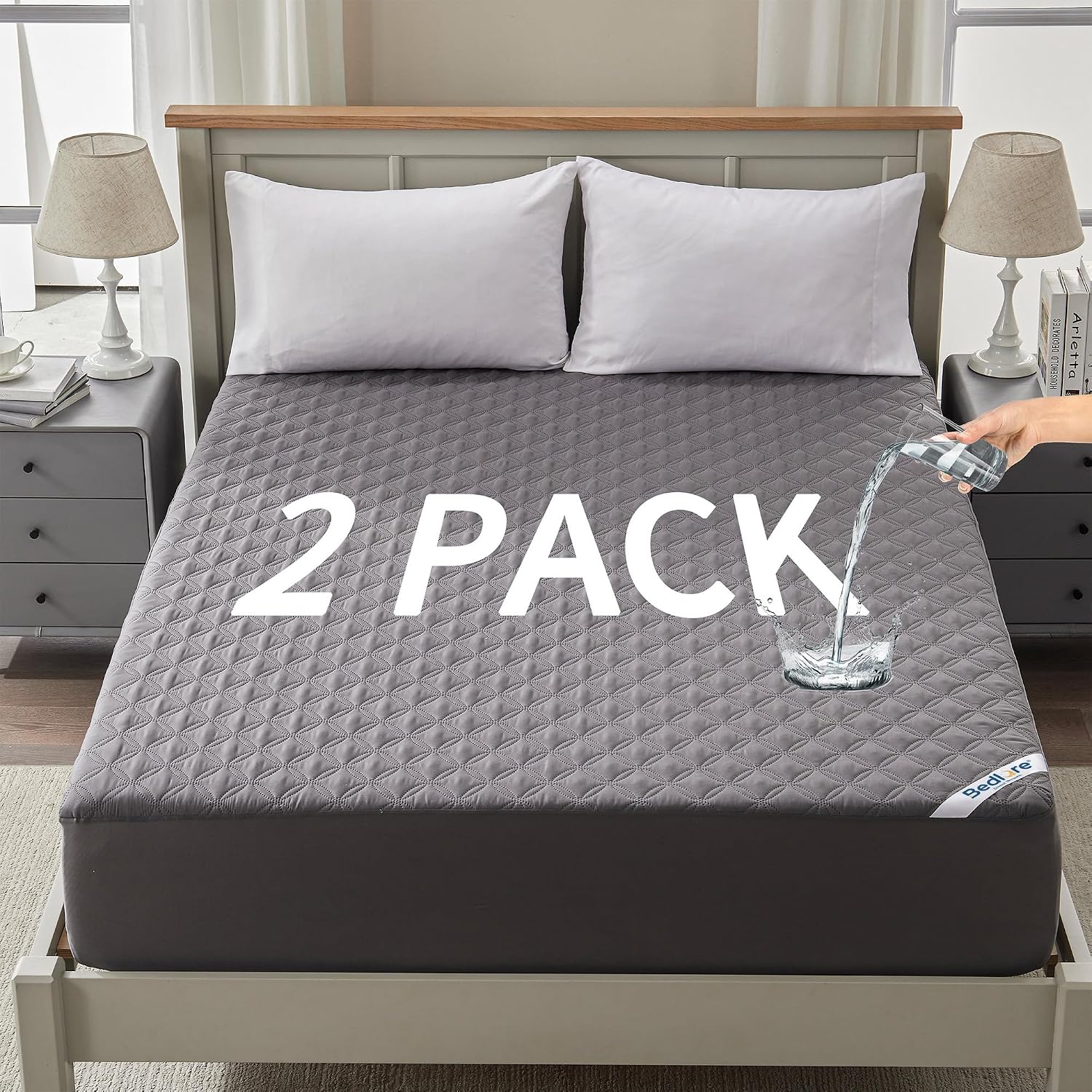
#2 pick
BEDLORE Waterproof Mattress Protector — Queen, 2 Pack
- 2 covers in one pack
- Waterproof TPU backing
- Deep pocket 6"–18"