Verdict: if your mattress is too firm, a 2–4 inch pillow-top topper is the fastest, cheapest comfort upgrade you can buy — and our queen pick costs about $47.99 versus four figures for a new mattress. A firm sleep surface is one of the most common aggravators of morning back stiffness: it concentrates your body weight at the hips and shoulders. A thick pillow-top layer spreads that load and lets the spine settle into a more neutral line for many side and back sleepers. BEDLORE's topper line is marketed exactly for this — the listing for our queen pad pick literally says "for back pain relief" — with 15,487 public ratings (4.3★) behind the family.
| Pick | Size | Price | |
|---|---|---|---|
| BEDLORE Mattress Topper — Queen, Pillow Top | Queen | $47.99 | Buy → |
| BEDLORE Mattress Pad — Queen, for Back Pain Relief | Queen | $45.99 | Buy → |
| BEDLORE Mattress Topper — King, Pillow Top | King | $78.99 | Buy → |
When a topper helps — and when it does not
Helps: firm-bed pressure points
If you fall asleep fine but wake stiff at the shoulders or hips, and pressing a hand into your mattress meets brick-like resistance, pressure concentration is the likely culprit and a pillow-top directly addresses it. Side sleepers report the biggest improvement — shoulders and hips sink in instead of taking the load.
Helps: a good mattress gone tired
A still-supportive mattress with a flattened comfort layer is a classic topper case: you keep the support underneath and rebuild the surface above it for a fraction of replacement cost.
Does not: replace a broken mattress
A topper adds comfort on top of whatever is beneath it. If the mattress sags visibly in the middle, or a dip holds your shape after you get up, a topper will follow that dip. Support problems need a mattress solution — a topper is the finishing layer, not the foundation.
Does not: treat medical conditions
New, severe, or radiating back pain is a doctor conversation, not a bedding conversation. Think of the topper as removing an aggravator, which is genuinely worthwhile, not as therapy.
Choosing thickness and fit
For pressure relief, 2–4 inches is the useful range — thinner barely registers, thicker turns squishy and swallows you. Fit matters as much: our picks' stretchable pockets fit 6–18 inch mattresses, and the box-stitched fill stops the loft from migrating into lumps. Measure your mattress height (the size guide shows how) and let the skirt do its job.
Keep it dry: the pairing nobody mentions
A topper should never be your mattress's only defense — most fiber toppers are not waterproof, and one accident soaks straight through into the foam beneath. The correct stack is mattress → waterproof protector → topper → sheet: comfort on top, protection underneath, and the full reasoning is in protector vs pad vs topper.
The picks
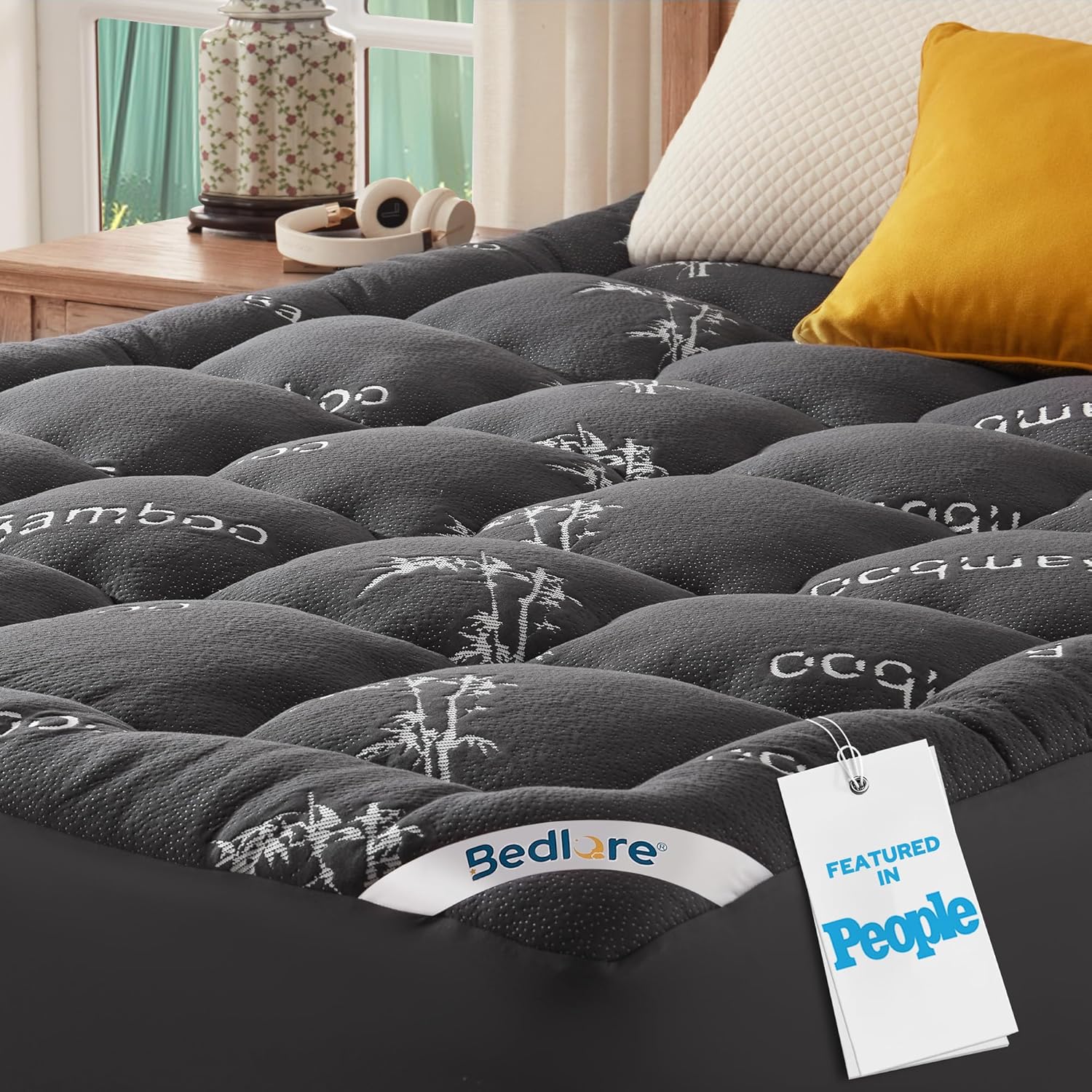
#1 pick
BEDLORE Mattress Topper — Queen, Pillow Top
- Thick pillow-top loft
- Stretchable skirt fits 6"–18"
- Soft breathable fill
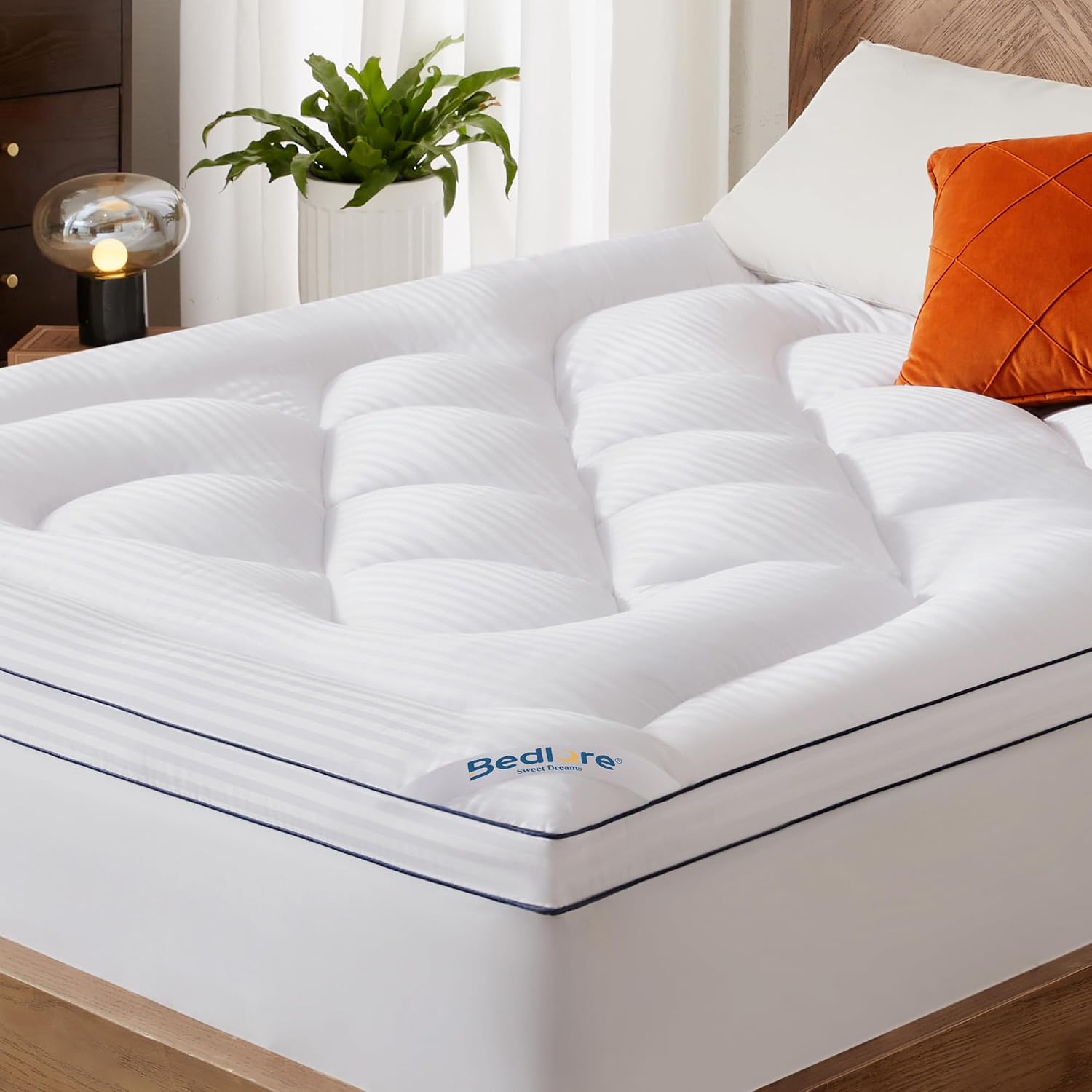
#2 pick
BEDLORE Mattress Pad — Queen, for Back Pain Relief
- Quilted pillow-top surface
- Deep pockets fit 6"–18"
- Positioned for back pain relief
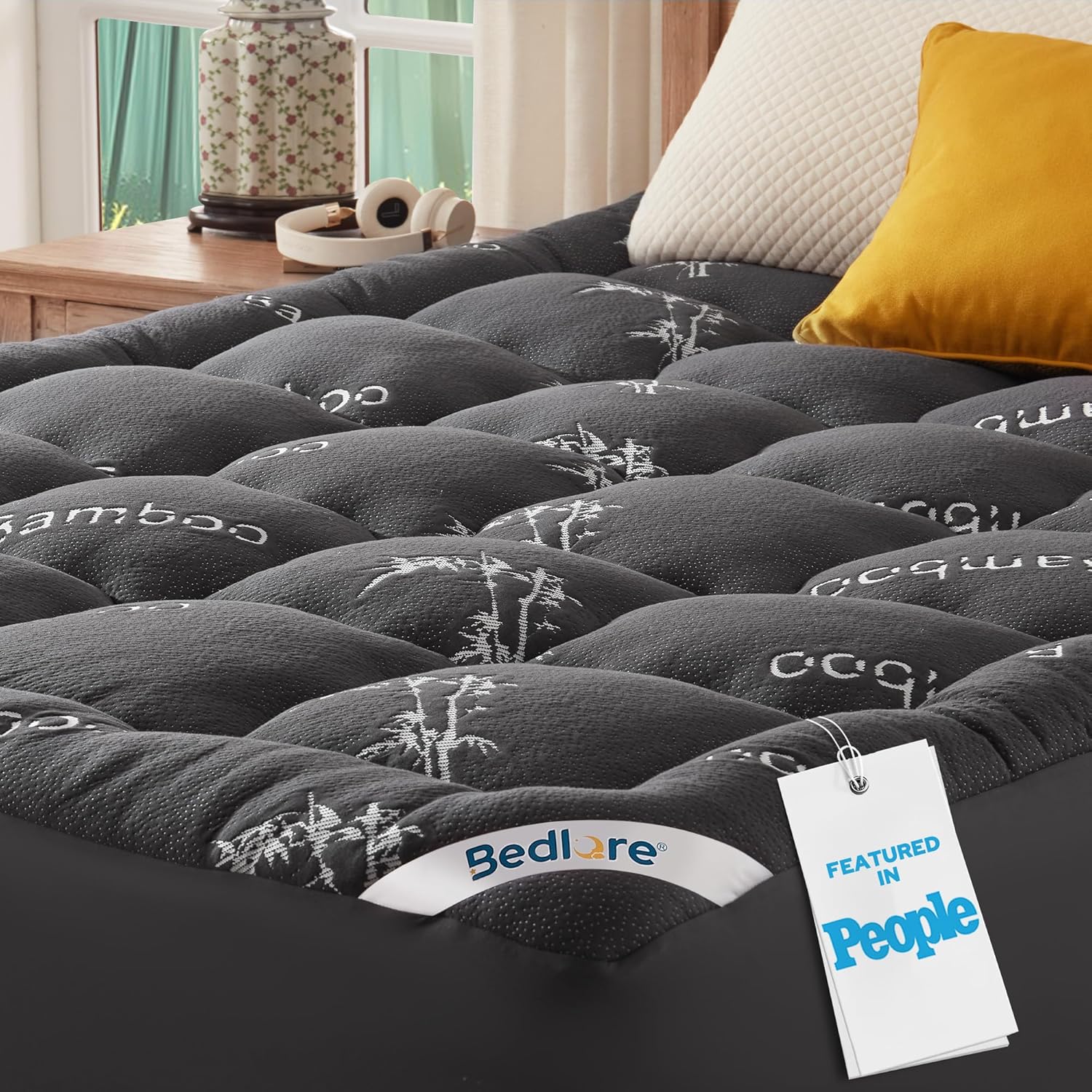
#3 pick
BEDLORE Mattress Topper — King, Pillow Top
- Thick pillow-top loft
- Stretchable skirt fits 6"–18"
- Bamboo-viscose cover variant offered
Care
Fiber-fill toppers cannot go in a washing machine — spot-clean with mild detergent, press (don't wring) with towels, and air dry flat for a full day before remaking the bed. Sprinkle baking soda and vacuum after it sits an hour to freshen between deep cleans. The washable part of your bed is the protector underneath — another reason the pairing works.