Verdict: get two waterproof covers per bed and stop worrying about the mattress. Potty training is a laundry problem, not a furniture problem — as long as liquid never reaches the foam. A quiet, deep-pocket waterproof cover sized to your child's bed, backed up by a second cover in the drawer, turns 3 a.m. accidents into a two-minute strip-and-swap. For a standard crib or toddler mattress, the BEDLORE Crib Mattress Protector — Waterproof 2 Pack two-pack ($19.99) does exactly this out of the box; for kids' beds it is the twin deep-pocket cover, and for a shared family bed the queen two-pack.
| Pick | Size | Price | |
|---|---|---|---|
| BEDLORE Waterproof Mattress Protector — Twin | Twin | $22.99 | Buy → |
| BEDLORE Crib Mattress Protector — Waterproof 2 Pack | Crib | $19.99 | Buy → |
| BEDLORE Waterproof Mattress Protector — Queen, 2 Pack | Queen | $40.99 | Buy → |
What matters most for potty-training nights
Speed of the swap
The whole game at 3 a.m. is minutes. Deep-pocket skirts (6–15 inches on the twin and full) pull on over the corners in seconds without unsnapping anything. Keep the spare cover on top of the dresser, not buried in a closet — you are shopping for a ten-second reach, not a search.
Quietness, because a crinkly bed wakes kids up
Toddlers and plastic-covered mattresses are a bad match: the noise announces itself at every roll-over and some kids refuse to sleep on it. The BEDLORE covers use a soft noiseless surface — that spec matters more in a child's room than anywhere else in the house.
Wash routine that can take a beating
During active training, wash covers every two to three days: cold water, mild detergent, no fabric softener (it coats the waterproof membrane), low-heat or air dry. High heat is what kills waterproofing over time. The full routine is in our cleaning guide.
Protect the crib mattress from day one
Crib mattresses are used by multiple children over the years, which makes stains a resale-value problem, not just a hygiene one. A snug two-pack covers the entire crib and toddler period for about $19.99. Follow safe-sleep guidance: the cover goes under the fitted sheet, flat and snug, with no loose padding in the crib for young infants.
The picks
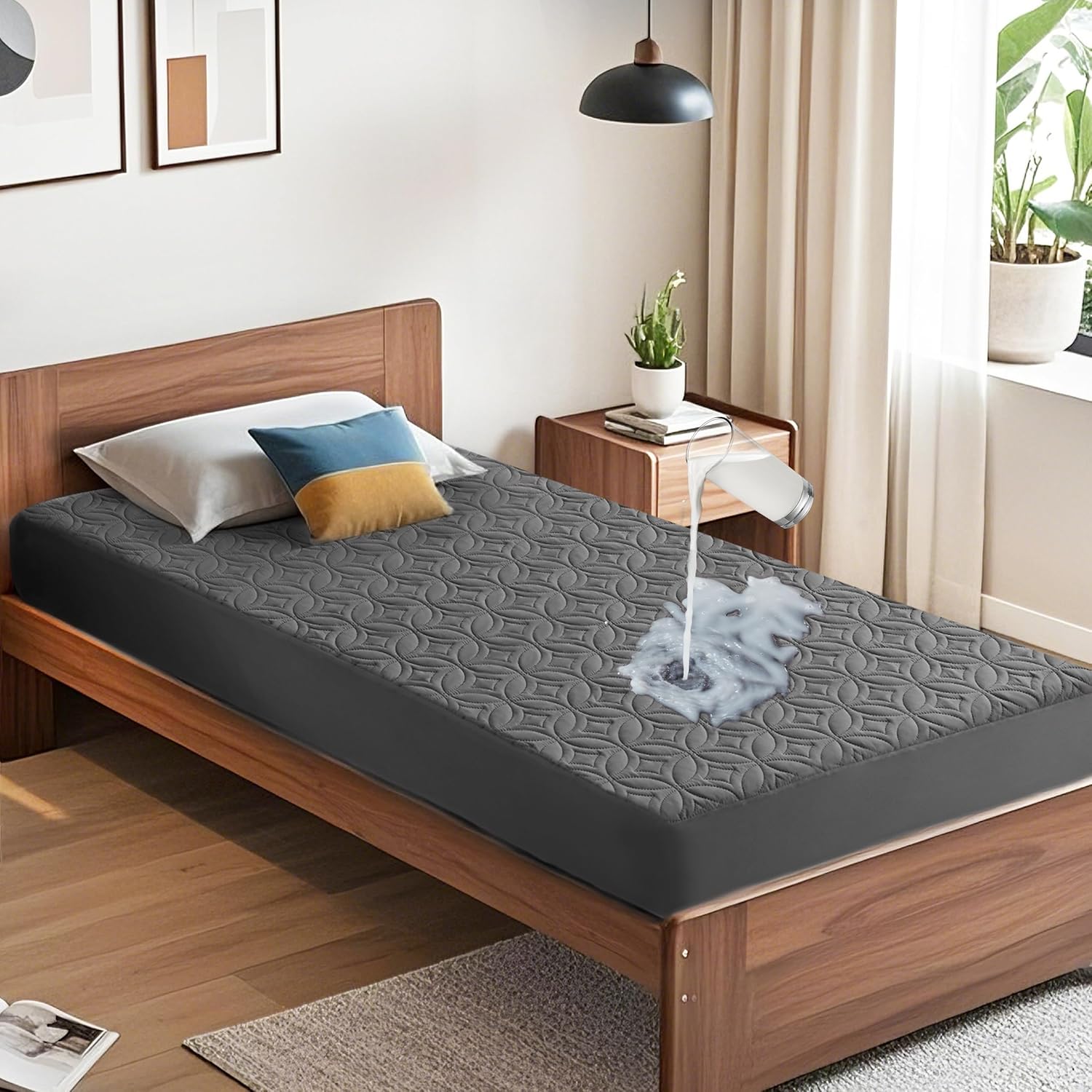
#1 pick
BEDLORE Waterproof Mattress Protector — Twin
- Waterproof TPU backing
- Deep pocket skirt, fits 6"–15"
- Noiseless soft cover
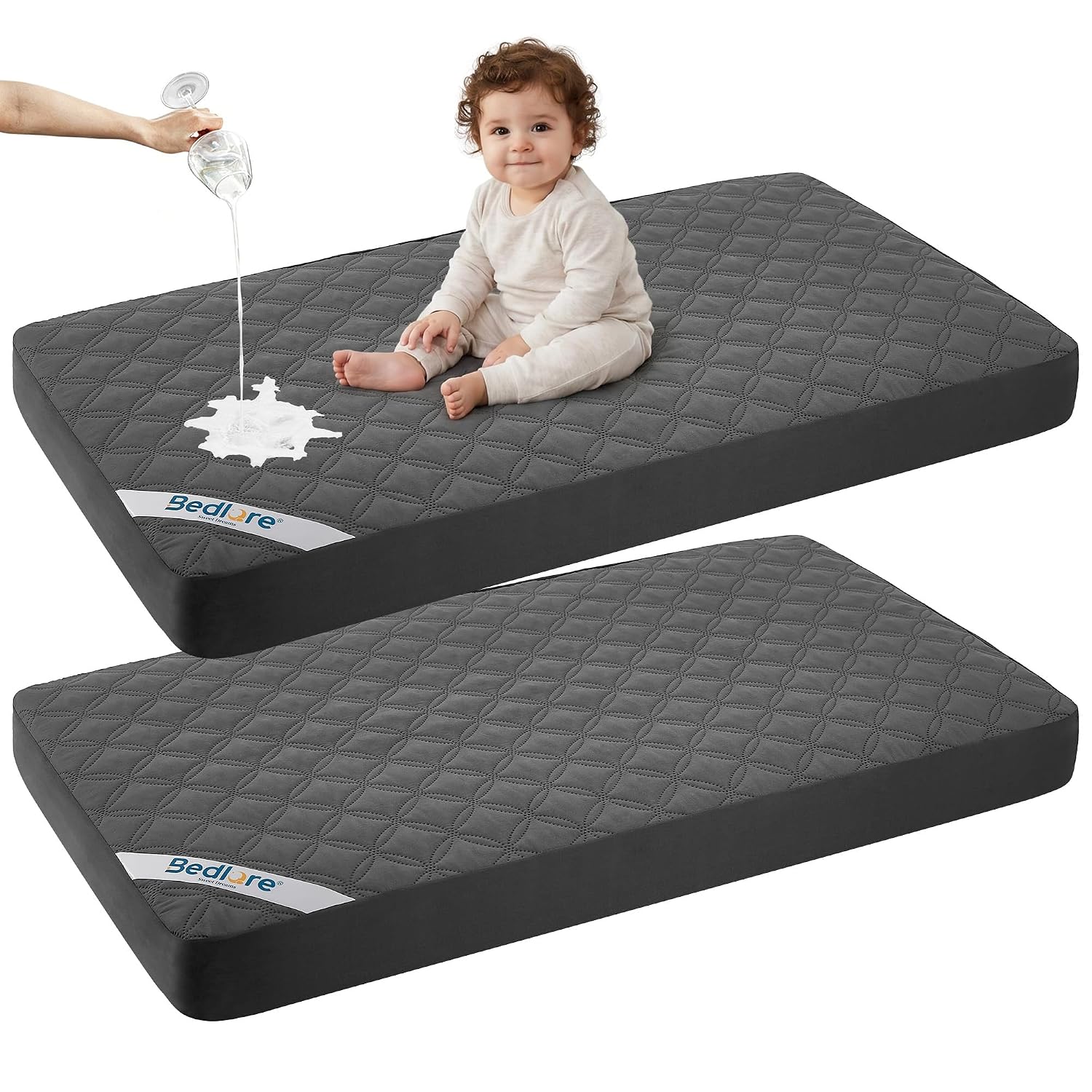
#2 pick
BEDLORE Crib Mattress Protector — Waterproof 2 Pack
- 2 covers per pack
- Waterproof, skin-friendly surface
- Fits standard crib & toddler mattresses
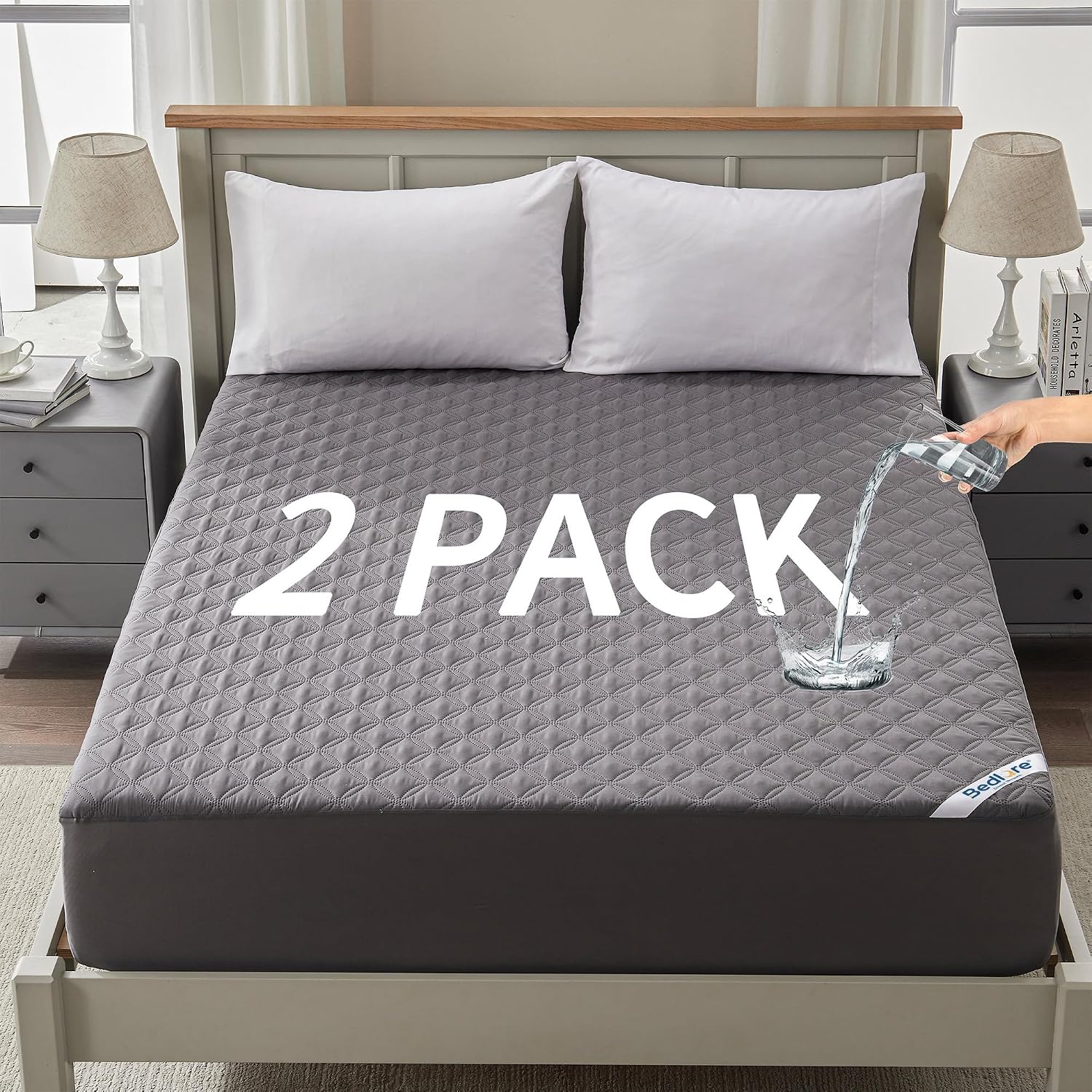
#3 pick
BEDLORE Waterproof Mattress Protector — Queen, 2 Pack
- 2 covers in one pack
- Waterproof TPU backing
- Deep pocket 6"–18"
A realistic night, with the right setup
Accident happens → strip the fitted sheet and the cover (both go in a laundry basket by the door) → wipe any surface moisture off the mattress top — there is none if the membrane did its job → pull the spare cover on, fresh sheet on top, child back in bed. Total elapsed time: under five minutes, and the mattress underneath is exactly as clean as the day you bought it. That is the entire value proposition: you are not saving the cover, you are saving the mattress and your sleep.